

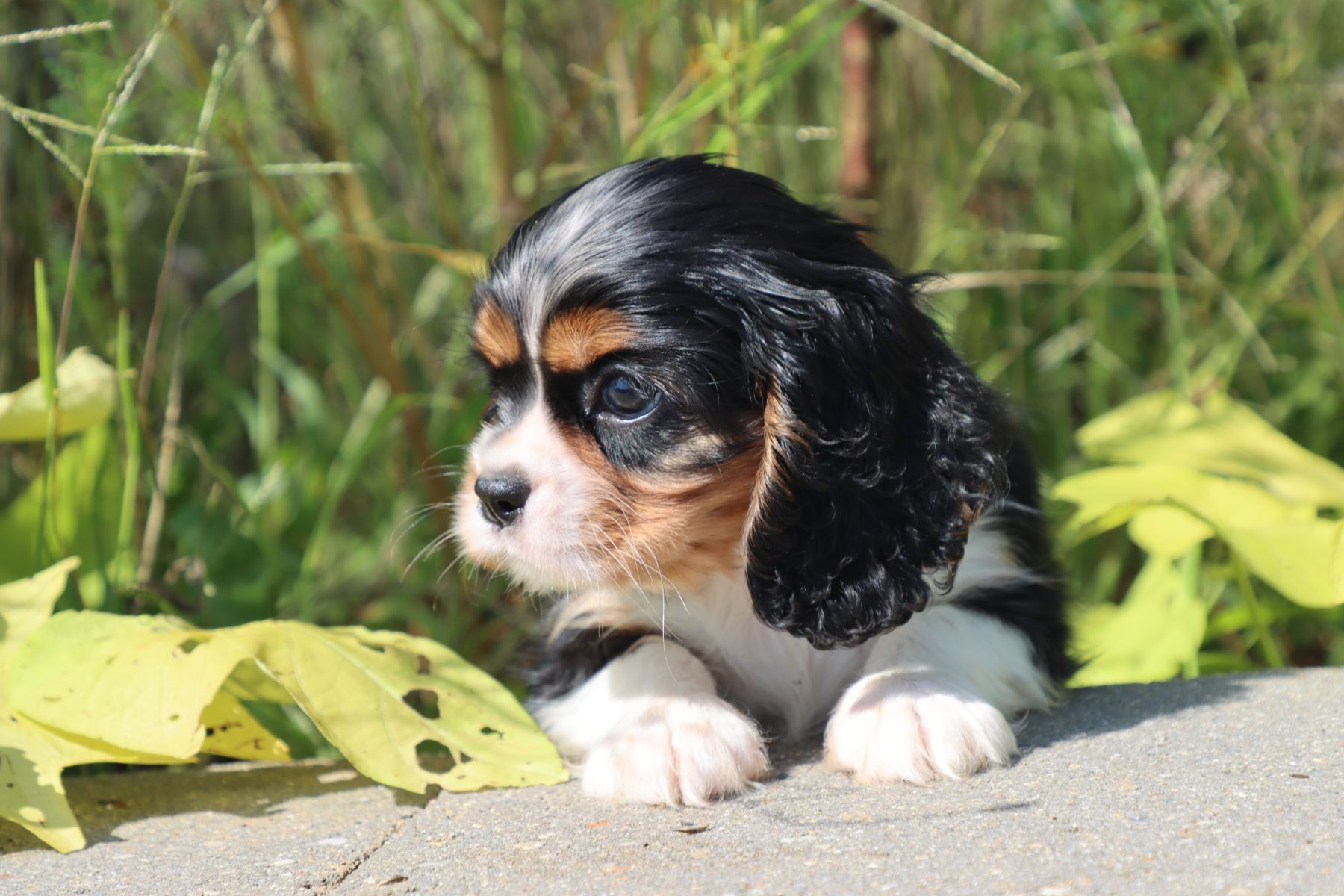
Training a Cavalier King Charles Spaniel begins almost as soon as your puppy comes home, but what training looks like at nine weeks can differ greatly from what your dog needs at six months, one year, or beyond.
During early puppyhood, training often focuses on the basics of everyday life. Your puppy is learning where to go potty, what they can chew, how to respond to their name, and what routines to expect. As your Cavalier matures, those early lessons provide the foundation for better manners, greater independence, and more reliable behavior.
Allowing training to evolve with your dog is an important part of raising a Cavalier King Charles Spaniel from puppyhood to adulthood. Instead of thinking of puppy training as something you eventually finish, it can be helpful to view training as an ongoing form of communication that grows along with your Cavalier.
Start With Simple Skills During Early Puppyhood
When your Cavalier first comes home, nearly everything is new.
Your puppy is adjusting to unfamiliar people, rooms, sounds, smells, routines, and expectations. This isn’t the time to overwhelm them with a long list of commands.
Instead, focus on simple skills that make everyday life easier. This may include responding to their name, coming when called from a short distance, beginning house training, getting comfortable with a leash, and learning which behaviors earn positive attention.
Short training sessions generally make sense for young puppies because their attention spans are still developing. A few successful repetitions can be more productive than trying to keep a puppy focused for an extended period.
These early weeks are also about establishing routines. Knowing what to expect during the first 30 days with a Cavalier puppy can help you introduce training without expecting too much too quickly.
Use Positive Reinforcement to Build Good Habits
Cavaliers tend to be affectionate dogs that enjoy interacting with their people. Training can become another positive part of that relationship.
Positive reinforcement involves rewarding behaviors you want your puppy to repeat. Rewards might include small treats, praise, toys, play, or affection depending on what motivates your dog.
Timing matters. Rewarding your Cavalier when they make a good choice helps them begin connecting that behavior with a positive result.
This applies beyond formal commands. You can reinforce your puppy for settling quietly, walking nicely, greeting someone calmly, choosing an appropriate toy, or paying attention to you amid distractions.
Over time, these small interactions help shape everyday behavior.
Training Becomes More Challenging as Distractions Increase
As your Cavalier grows, their world gets bigger.
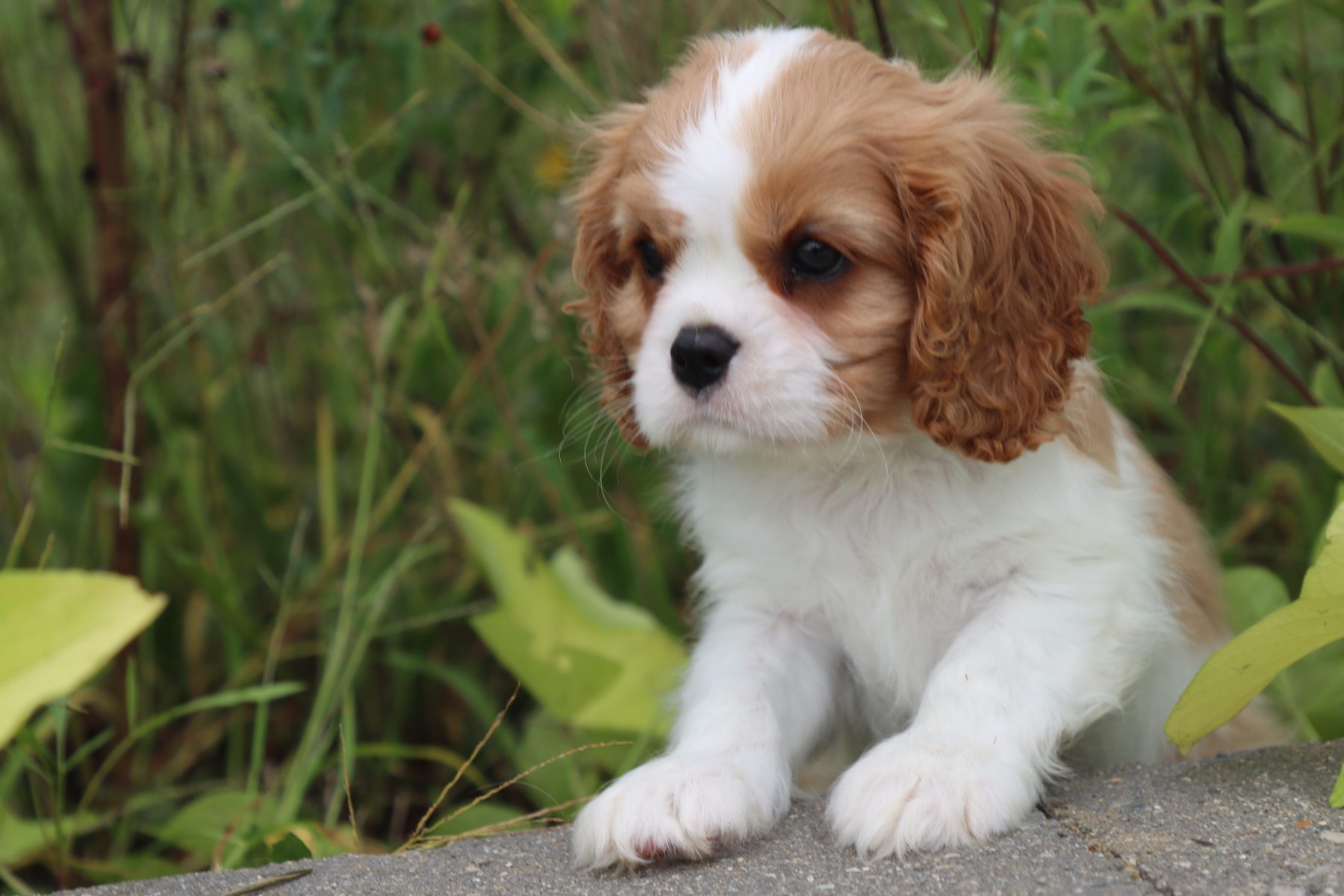
A puppy who can sit perfectly in a quiet living room may suddenly struggle with the same request when another dog walks by outside. This doesn’t necessarily mean they have forgotten their training.
Learning a behavior and performing that behavior around distractions are two different challenges.
As your puppy becomes comfortable with familiar skills, gradually practice them in different rooms, outdoors, or around manageable distractions. The goal is to help your Cavalier understand that the same expectations apply in different situations.
Socialization can complement this process by giving your puppy positive experiences with different people, environments, sounds, and situations while they continue learning how to respond to you.
Adolescence May Test Your Consistency
Adolescence can be an interesting stage of Cavalier training.
Your puppy may have more energy, confidence, curiosity, and physical ability than they did a few months earlier. At the same time, adult impulse control is still developing.
You might notice your Cavalier becoming more distracted or testing boundaries that seemed well established.
Consistency matters most during this stage.
Continue reinforcing familiar skills rather than assuming your puppy should automatically know what to do in every situation. If a behavior becomes less reliable, temporarily make the task easier and rebuild from there; that can be more productive than getting frustrated.
Many common mistakes new Cavalier owners make involve expecting too much too quickly or being inconsistent with training. Adolescence is a good reminder that development isn’t always perfectly linear.
Everyday Manners Become More Important
Once the basic puppy skills are established, training can increasingly focus on how your Cavalier fits into everyday family life.
That may mean learning to wait calmly before going through a doorway, walk politely on a leash, settle while the family eats dinner, greet visitors without getting overly excited, or come when called despite distractions.
These skills aren’t necessarily complicated, but they can make a significant difference in daily life.
They also require practice in the situations where you actually want your dog to use them. A Cavalier learns to settle during dinner by practicing calm behavior during household routines, not only during a designated training session.
As your dog matures, training begins to blend more naturally into your day.
Mental Stimulation Remains Valuable as Your Cavalier Matures
Training isn’t only about teaching manners. It also gives your Cavalier an opportunity to think, problem-solve, and interact with you.
Even after your dog understands the basic household rules, continuing to practice skills or introduce new ones can provide valuable mental stimulation.
You might teach a new trick, practice familiar commands in a different environment, work on leash manners during a walk, or combine training with interactive toys and games.
Mental activity can be particularly useful for energetic young dogs, but it doesn’t stop being valuable once your Cavalier reaches adulthood.
The goal doesn’t have to be constantly teaching advanced behaviors. Continuing to give your dog opportunities to learn helps keep training engaging and reinforces communication between you.
Adult Dogs Still Benefit From Training
Reaching adulthood doesn’t mean your Cavalier’s training is complete.

By this point, many of the behaviors that once required deliberate practice may have become familiar habits. Your dog understands the household routine, knows what you expect, and can often make good choices with much less direction.
Those skills still benefit from reinforcement.
Continue acknowledging the behaviors you appreciate and practicing important skills from time to time. Life changes can also create new training opportunities. Moving to a new home, traveling, welcoming a new family member, or experiencing a different daily schedule may require your Cavalier to adjust.
Training provides a familiar way to communicate through those changes.
Let Training Grow Along With Your Cavalier
The biggest change between training a young puppy and an adult Cavalier isn’t necessarily the number of commands they know. It’s the way training becomes part of your relationship.
Early on, you may feel like you’re constantly teaching and redirecting. Gradually, your Cavalier begins understanding the routines and expectations of your home. Skills become habits, communication gets easier, and you can build on the foundation you established during puppyhood.
Patience, consistency, and positive reinforcement help make that progression possible.
At Carlisle Cavaliers, we give our puppies a strong start through early handling and socialization before they leave for their new homes at nine weeks old. From there, each family has the opportunity to continue building on that foundation as their puppy grows.
If you’re looking forward to starting that journey with a Cavalier of your own, take a look at our available puppies or contact Carlisle Cavaliers to learn more about our puppies and upcoming litters.
Leave a Reply