

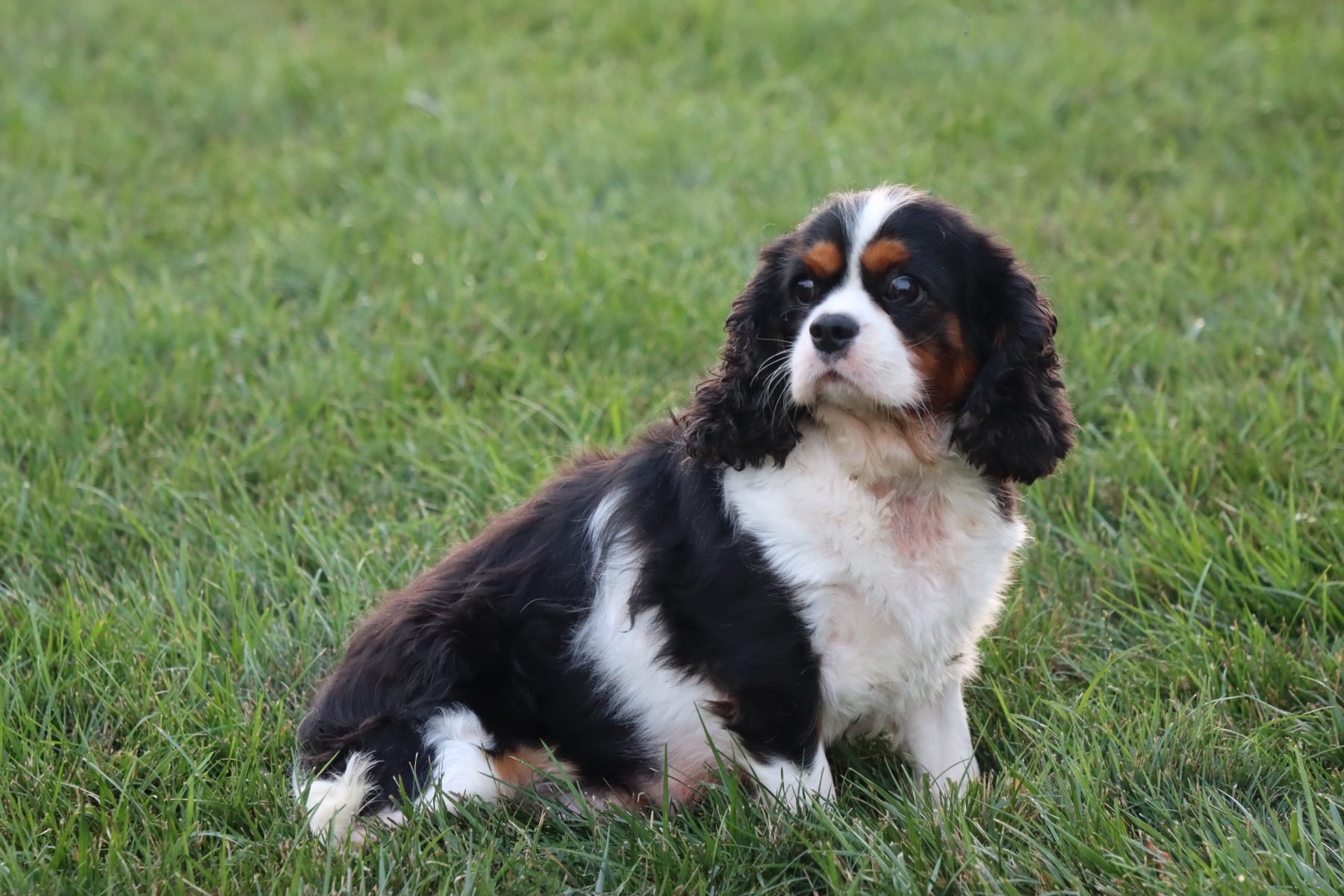
When you first bring home a Cavalier King Charles Spaniel puppy, much of your day can seem to revolve around their needs. There are frequent potty breaks, meals to schedule, short training sessions, playtime, naps, and plenty of supervision to make sure your curious new family member isn’t getting into something they shouldn’t.
That routine doesn’t last forever. As your Cavalier grows, they become more capable, habits become established, and the way you care for them begins to change. Some things become easier, while others simply take a different form.
Adjusting along with your dog is an important part of raising a Cavalier King Charles Spaniel from puppyhood to adulthood. Rather than changing everything once your puppy reaches a certain age, you can gradually adapt their routine as their abilities and needs evolve.
Feeding Routines Change as Your Cavalier Grows
Young puppies need a feeding schedule appropriate for their age and stage of development. As they mature, both the frequency of meals and the amount of food they need can change.
This is one area where individual needs matter more than a one-size-fits-all rule. Your veterinarian can help determine an appropriate diet and feeding amount based on your Cavalier’s age, body condition, activity level, and overall health.
Treats deserve consideration, too. Puppies may receive quite a few small rewards during positive reinforcement training, and those can add up. Keeping track of everything your dog eats throughout the day makes it easier to maintain a balanced routine as they grow.
Potty Breaks Become More Predictable
Few things illustrate the difference between puppyhood and adulthood quite like house training.
A young puppy needs frequent opportunities to go outside. They’re still developing physically while also learning where they’re supposed to go, so owners need to be proactive.
As your puppy grows and house training becomes established, bathroom habits generally become more predictable. You begin recognizing your dog’s normal schedule, and your Cavalier gets better at communicating when they need to go outside.
Regular opportunities should remain part of adult life. What changes is the amount of supervision and frequency required.
Eventually, something that occupied a large portion of those early puppy days simply becomes another familiar part of your routine. Establishing consistency during the first 30 days with your Cavalier puppy can help build that foundation.
Sleep Develops Into a More Established Rhythm
Young puppies sleep a lot because their bodies and brains have an enormous amount of developing to do.
They may bounce between enthusiastic play and deep sleep throughout the day. Providing opportunities to rest is just as important as providing activity.
As your Cavalier gets older, sleep and activity tend to fit more naturally into the household schedule. Your dog may learn to rest while you’re working, settle after a walk, or recognize when everyone is winding down for the night.
That doesn’t mean adults no longer need plenty of rest. The difference is that downtime becomes part of a more predictable rhythm rather than the frequent sleep-and-play cycle of early puppyhood.
Helping your puppy establish healthy nighttime sleep routines early can make this transition easier.
Exercise Evolves With Physical Development
A young puppy’s activity shouldn’t look exactly like an adult dog’s exercise routine.

Play and opportunities to explore can provide plenty of activity early on. A growing body doesn’t need strenuous exercise simply because a puppy has plenty of enthusiasm.
As your Cavalier matures, walks and other forms of activity can gradually evolve. Adult Cavaliers often enjoy walks, games, outdoor exploration, and spending active time with their families.
The right routine depends on the individual dog, including age, health, conditioning, and lifestyle. Understanding how much exercise a Cavalier King Charles Spaniel needs can help you adjust activity as your dog develops.
Mental stimulation should remain part of the equation as well. Training, interactive play, sniffing, and exploring different environments give your Cavalier productive ways to use their mind throughout life.
Training Moves Beyond Puppy Basics
Much of early puppy training revolves around immediate needs.
You’re teaching your Cavalier where to go potty, how to respond to their name, what they’re allowed to chew, how to walk on a leash, and what the basic household rules are.
Once those foundations are established, expectations can grow.
Older puppies can practice familiar skills around more distractions, improve reliability, and continue learning new behaviors. There may be bumps during adolescence, when increased curiosity sometimes competes with your dog’s ability to focus.
Consistent positive reinforcement helps carry those early lessons forward.
By adulthood, training often feels less like a scheduled puppy activity and more like communication you naturally use throughout the day.
Grooming Changes With the Adult Coat
The coat on a young Cavalier puppy isn’t the coat they’ll have forever.
As your dog matures, the silky adult coat and characteristic feathering continue to develop. Those physical changes can bring greater grooming needs.
Introducing brushing and handling early makes the transition easier. A puppy who becomes comfortable having their ears, paws, mouth, and body handled is gaining experience that will be useful throughout life.
As the adult coat comes in, regular grooming helps prevent tangles and mats. Nail trimming, bathing, ear care, and dental care remain part of the ongoing routine as well.
It’s another reminder that your Cavalier’s growth during the first year affects much more than their size.
Supervision Gradually Gives Way to Independence
Puppies are curious, and curiosity requires supervision.
A young Cavalier doesn’t automatically know that electrical cords aren’t toys or that something dropped on the floor may not be safe to eat. Puppy-proofing helps, but owners still spend plenty of time monitoring what their dog is doing.
Over time, your puppy learns household boundaries. Training becomes more reliable, puppy behaviors may decrease, and you develop a better understanding of what your individual dog can handle.
Additional independence should come gradually rather than simply being granted because your Cavalier reaches a certain age.
This also includes learning to relax without constant interaction. Cavaliers generally enjoy being near their people, but being close doesn’t always have to involve active attention. Becoming comfortable simply relaxing nearby is a valuable part of adult life.
A familiar crate or quiet resting space can help puppies learn that downtime and independence are normal parts of the day.
Some Needs Don’t Change
Adulthood doesn’t mean your Cavalier stops needing you.
Companionship, exercise, grooming, mental stimulation, training, veterinary care, and opportunities to engage with the world remain important.
What changes is how those needs fit into your life together.
Frequent puppy potty trips become a familiar bathroom schedule. Introductory training develops into everyday communication. Puppy play evolves into walks, games, and other activities. Constant supervision gradually becomes trust built through experience.
Those changes don’t happen overnight, which is why paying attention to your individual dog is more useful than watching the calendar.
Let Your Routine Grow Along With Your Cavalier
By the time puppyhood begins giving way to adulthood, both you and your dog have learned quite a bit. Your Cavalier understands your routines and expectations better, and you’ve learned their habits, preferences, personality, and ways of communicating.

The care you provide should continue evolving alongside that relationship.
If you’re still at the beginning of the journey, choosing a puppy that has been given a strong start matters. Carlisle Cavaliers has been raising Cavalier King Charles Spaniels since 2003, with an emphasis on healthy, well-socialized puppies prepared to join their new families. Our parent dogs are carefully health tested, and we put considerable care into those important early weeks.
Browse our available puppies or contact Carlisle Cavaliers with your questions about bringing a Cavalier home. We’d love to help you find the right addition to your family.
Leave a Reply