

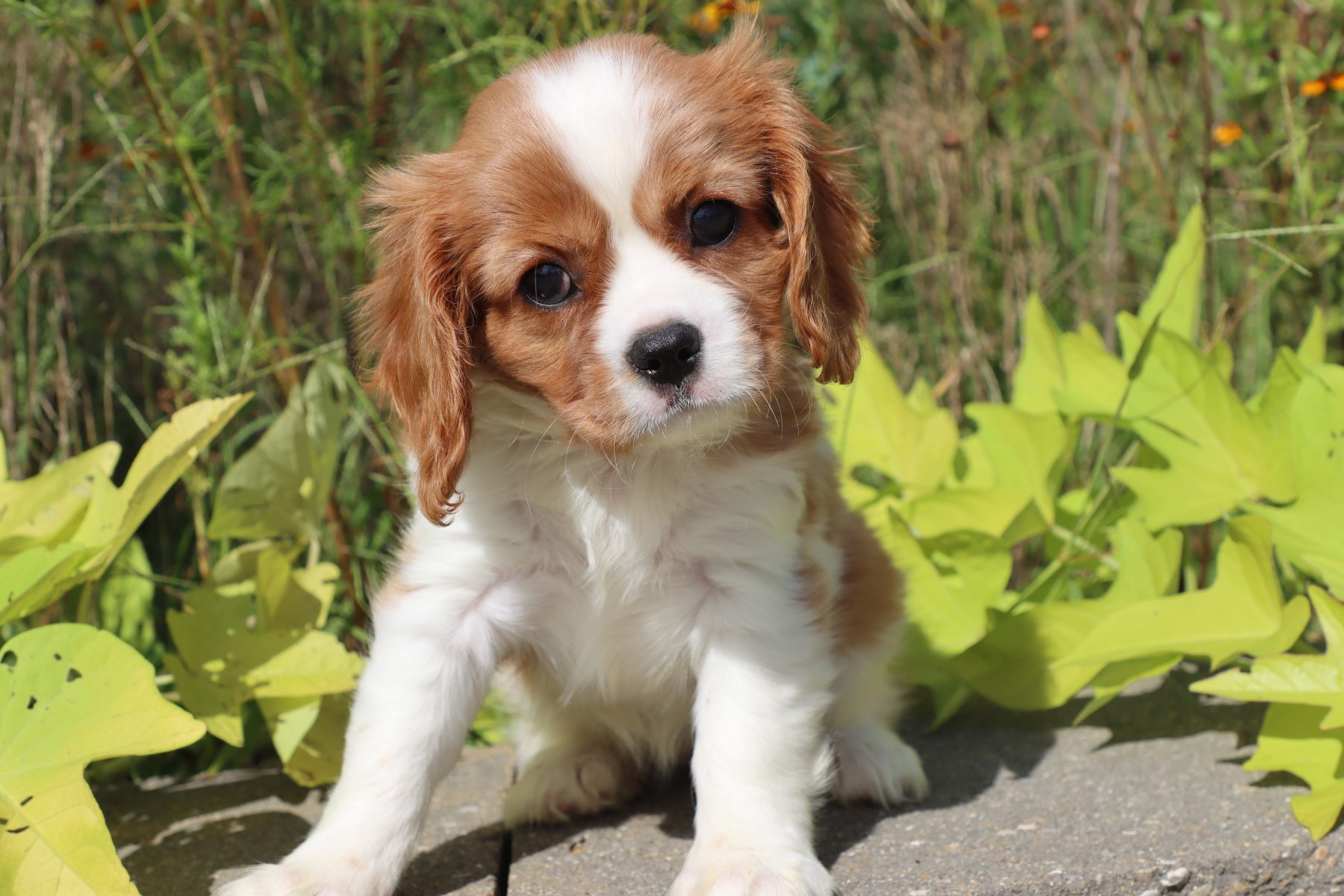
Cavalier King Charles Spaniels are known for being affectionate companion dogs, but anyone who has spent time with a Cavalier puppy knows that calm companionship isn’t the whole story. Puppies can be playful, curious, easily distracted, and seemingly ready for another round of activity just when you thought they were getting tired.
If you’re wondering when your Cavalier will calm down, there isn’t one specific age when that happens. Maturity develops gradually, and every puppy follows a slightly different timeline.
Understanding the difference between normal puppy energy and developing maturity can make those early months much easier to navigate. It’s one part of raising a Cavalier King Charles Spaniel from puppyhood to adulthood, when the routines and expectations established early begin paying off as your dog matures.
Why Cavalier Puppies Have So Much Energy
Puppies have a lot to discover.
A trip into the backyard, a new toy, an unfamiliar sound, or someone walking through the door can suddenly become the most interesting thing in the world. Play and exploration are ways puppies interact with and learn about their surroundings.
Cavaliers are also social dogs. They generally enjoy being around their people, so activity within the household can quickly get their attention.
Sometimes what appears to be endless energy can even be the opposite. An overtired puppy may become increasingly wound up rather than settling. Zooming around, becoming mouthier during play, or having difficulty focusing can sometimes mean a young puppy needs quiet time and rest.
Getting to know your puppy’s patterns will help you recognize the difference between needing activity and needing a break. Establishing healthy sleep routines for your Cavalier puppy can also make it easier to balance activity with the rest young puppies need.
Energy Changes as Your Puppy Develops
A three-month-old Cavalier doesn’t have the same physical ability or maturity as a six- or nine-month-old puppy.
Very young puppies often alternate between short bursts of activity and plenty of sleep. As they grow stronger and more coordinated, their capacity for activity increases.
Then adolescence enters the picture.
The growth stages Cavaliers experience during their first year involve behavioral changes as well as physical ones. An adolescent Cavalier may have considerably more stamina than a young puppy while still developing the impulse control of an adult dog.
That combination can make the middle of puppyhood feel particularly energetic.
You may also notice greater distraction or independence. Something your puppy has done successfully dozens of times suddenly has competition from an interesting smell, another dog, or activity happening nearby.
These changes don’t mean your puppy is going backward. They’re still developing, and maintaining consistent training can help reinforce the habits you have already established.
When Will My Cavalier Start Settling Down?
There isn’t a universal age when Cavaliers calm down.
Rather than waiting for a particular birthday, look for gradual changes in behavior. Your dog may begin settling more easily after play, relaxing while other things happen around them, or demonstrating better focus during training.
Familiar routines may also require less direction from you.
These are all signs of increasing maturity, even if your Cavalier still gets excited when someone comes through the door or you reach for the leash.
Physical and behavioral maturity don’t necessarily happen simultaneously, either. A Cavalier can look like an adult while still showing plenty of adolescent behavior.
That’s why it is more useful to watch your individual dog than to wait for a particular age when they’re supposedly going to become calm.
Exercise Helps, but More Isn’t Always Better
It can be tempting to assume an energetic puppy simply needs to be tired out.
Appropriate physical activity certainly matters, but exhausting your puppy shouldn’t be the goal. Exercise should fit their age and physical development.
For younger puppies, play and opportunities to explore provide valuable activity. Walks and other forms of exercise can gradually develop as your Cavalier grows.
Adult Cavaliers benefit from regular activity, too. Although they’re known for enjoying time curled up with their people, many are enthusiastic about walks, games, and other opportunities to get moving. Understanding how much exercise a Cavalier King Charles Spaniel needs can help you create a routine that suits their age and energy level.
A satisfying routine includes more than physical exercise, though.
Give Their Brain Something to Do
Training, sniffing, exploring, interactive play, and age-appropriate toys provide opportunities for mental activity.
This can be particularly useful for a puppy who constantly seems to be looking for the next thing to do.
Training doesn’t need to involve lengthy sessions. Practicing a few familiar skills or introducing a new one can provide productive engagement while reinforcing good behavior.
Exploration is valuable as well. Allowing your dog appropriate opportunities to sniff and investigate their surroundings gives them information to process rather than making every outing solely about covering distance.
You can also use interactive toys and enrichment activities to give your Cavalier an appropriate outlet for their curiosity. On days when outdoor activity is limited, indoor games and rainy day activities can provide another way to keep them engaged.
Balancing physical and mental activity can be much more effective than simply trying to wear your puppy out.
Teach Your Puppy That It’s Okay to Relax
Puppies aren’t born knowing the rhythm of your household. They learn it by living with you.
Regular meals, potty breaks, play, training, and rest help make the day predictable. Over time, your puppy begins understanding that activity isn’t constant.
Calm moments can become part of that routine.
Your Cavalier doesn’t need someone actively entertaining them every minute they’re awake. Giving them opportunities to relax nearby can help them become more comfortable with downtime.
That’s particularly valuable for a breed that enjoys being close to people. Being together doesn’t always have to mean playing, petting, or receiving attention. Learning to simply settle beside you is a useful part of growing up.
A comfortable crate or quiet resting space can also give your puppy a familiar place to relax when they need a break.
Stay Consistent Through Adolescence
Adolescence isn’t the time to abandon expectations because your puppy suddenly seems more distracted.
Continue reinforcing familiar behaviors and rewarding the choices you want to see. Cavaliers often respond particularly well to praise, treats, play, and other forms of positive reinforcement.
Progress won’t always be perfectly linear. Puppies make mistakes, and adolescent dogs do too. Instead of expecting perfection, look for the smaller changes that show maturity developing.
The puppy who once needed constant redirection begins making better choices independently. The dog who couldn’t settle while the family ate dinner starts recognizing that this is a quieter part of the evening.
Those changes may happen gradually enough that you don’t immediately notice them.
A Calm Cavalier Is Still a Cavalier
When people ask when their puppy will calm down, they’re usually not hoping for a dog who never wants to play again. They’re looking forward to greater predictability.
Adulthood doesn’t mean losing that playful Cavalier personality.
An adult Cavalier may be perfectly content relaxing beside you and then become enthusiastic the moment it’s time for a walk or game. The difference is often their ability to transition between activity and rest.
Give your puppy time to reach that point.
Appropriate exercise, mental stimulation, positive training, rest, and consistent routines all provide support while maturity develops naturally. Avoiding some of the common mistakes new Cavalier owners make can also help you build healthy habits while your puppy grows.
The goal isn’t to rush puppyhood but to help your Cavalier develop the habits that will serve them as an adult.
If you’re deciding whether a Cavalier is the right fit for your family, understanding both the energetic puppy stage and the companion waiting on the other side of it is important. Carlisle Cavaliers raises healthy, well-socialized puppies and is happy to answer your questions about what life with one can look like.
Browse our available puppies or contact us when you’re ready to learn more.
Leave a Reply