

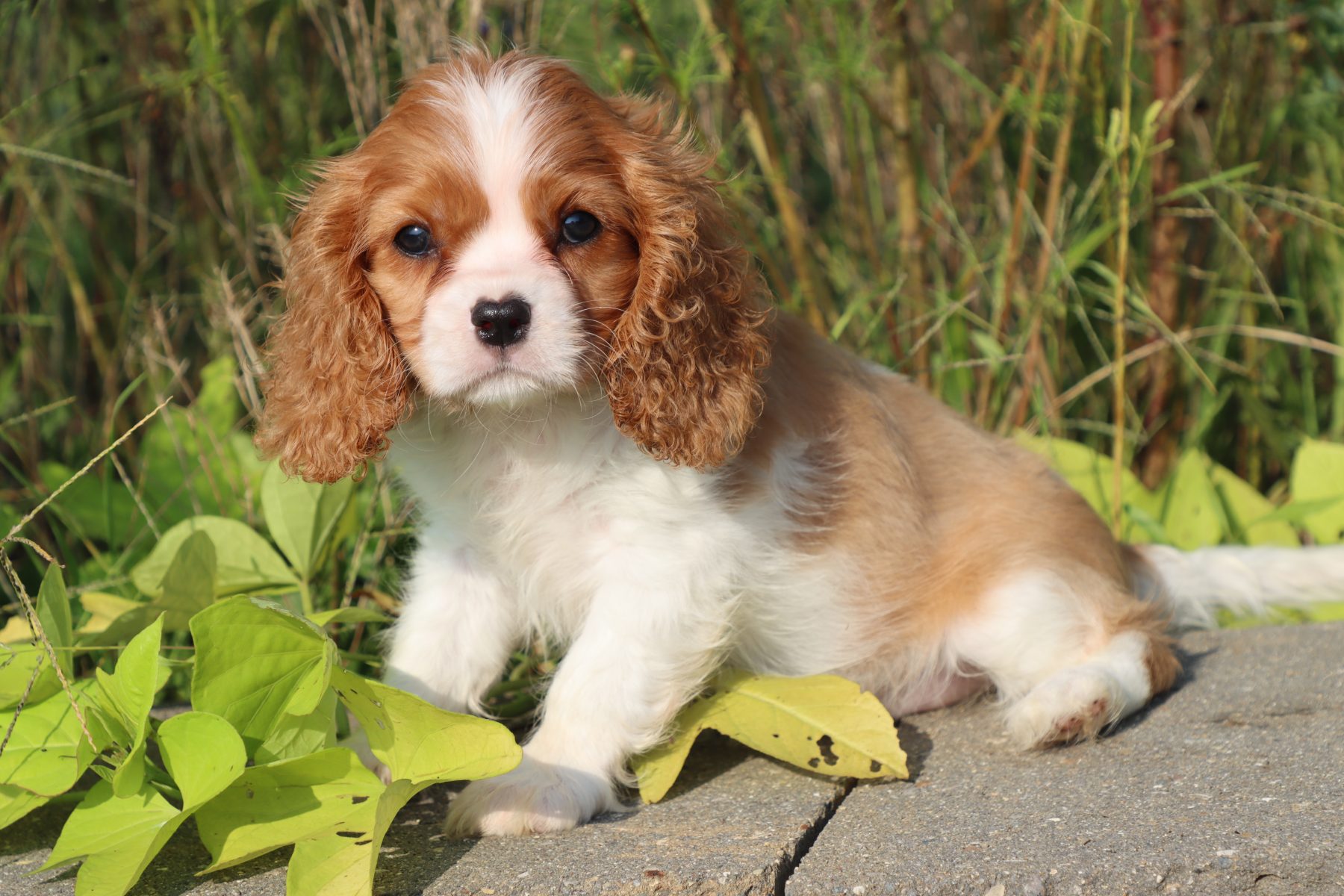
Bringing home a Cavalier King Charles Spaniel puppy is the beginning of a relationship that will change quite a bit over the next several months. The little puppy who needs frequent potty breaks, falls asleep after a burst of play, and wants to investigate everything within reach will gradually become an adult Cavalier with established routines, preferences, and a personality all their own.
We have been raising Cavaliers since 2003, and watching that transformation never gets old. Cavaliers are affectionate, intelligent dogs that tend to form close bonds with their families. You can see glimpses of those qualities early, but there is still plenty of growing and learning ahead.
Physical growth is only part of that process. Training, socialization, exercise, grooming, daily routines, and even the relationship you have with your dog evolve as your puppy moves toward adulthood. Knowing what to expect can help you enjoy each stage while giving your Cavalier the support they need along the way.
Your Cavalier’s Development Starts Before Coming Home
A puppy’s development begins well before the day you bring them home. Their earliest weeks with their mother and littermates are a time of rapid growth and learning.
Our puppies remain with their mother and littermates until they are nine weeks old. During that time, they’re growing quickly, interacting with the dogs and people around them, and beginning to experience more of the world.
By the time your puppy leaves for home, development is already well underway. What changes is who will be guiding the next stage. You become responsible for helping your Cavalier adjust to a new environment, establish routines, continue socializing, and begin learning what everyday life with your family looks like.
Settling Into Life at Home
Those first days can be exciting for you and a major adjustment for your puppy. Suddenly, nearly everything around them is unfamiliar.
Consistency can make that transition easier. Regular meals, potty breaks, playtime, training, and opportunities to sleep give your puppy some predictability while they become comfortable in their new surroundings. Our guide to what to expect in the first 30 days with a Cavalier puppy provides more tips for navigating this adjustment period.
Young puppies need plenty of rest, even when their bursts of energy suggest otherwise. They are also just beginning to understand house training, boundaries, and what you expect of them.
There can be a temptation to accomplish everything immediately. Instead, give your puppy time. A predictable routine, patient guidance, and positive experiences provide a much stronger foundation than trying to teach every skill during the first few days.
Growing Through the First Year
One of the most noticeable things about puppyhood is how quickly things change.
Your Cavalier isn’t simply getting larger every month. Their confidence, coordination, attention span, behavior, and ability to navigate new situations are developing alongside their body.
Early puppyhood brings rapid growth and plenty of learning. As your Cavalier becomes comfortable at home, curiosity and confidence often increase. Later, adolescence can introduce another shift as your puppy becomes more capable and occasionally more independent.
Understanding the Cavalier King Charles Spaniel puppy growth stages during the first year can help put these changes into perspective. Something that seems surprising at six months may make much more sense when you consider where your puppy is developmentally.
Every puppy is an individual, though. Two healthy Cavaliers of the same age won’t necessarily mature at exactly the same rate, so milestones are better viewed as general expectations than deadlines your puppy needs to meet.
Training Grows With Your Puppy
Training begins with the basics of everyday life.
When your puppy first comes home, that might mean house training, learning their name, becoming comfortable with a crate, walking on a leash, and beginning to understand household boundaries. As those skills become familiar, training can progress.
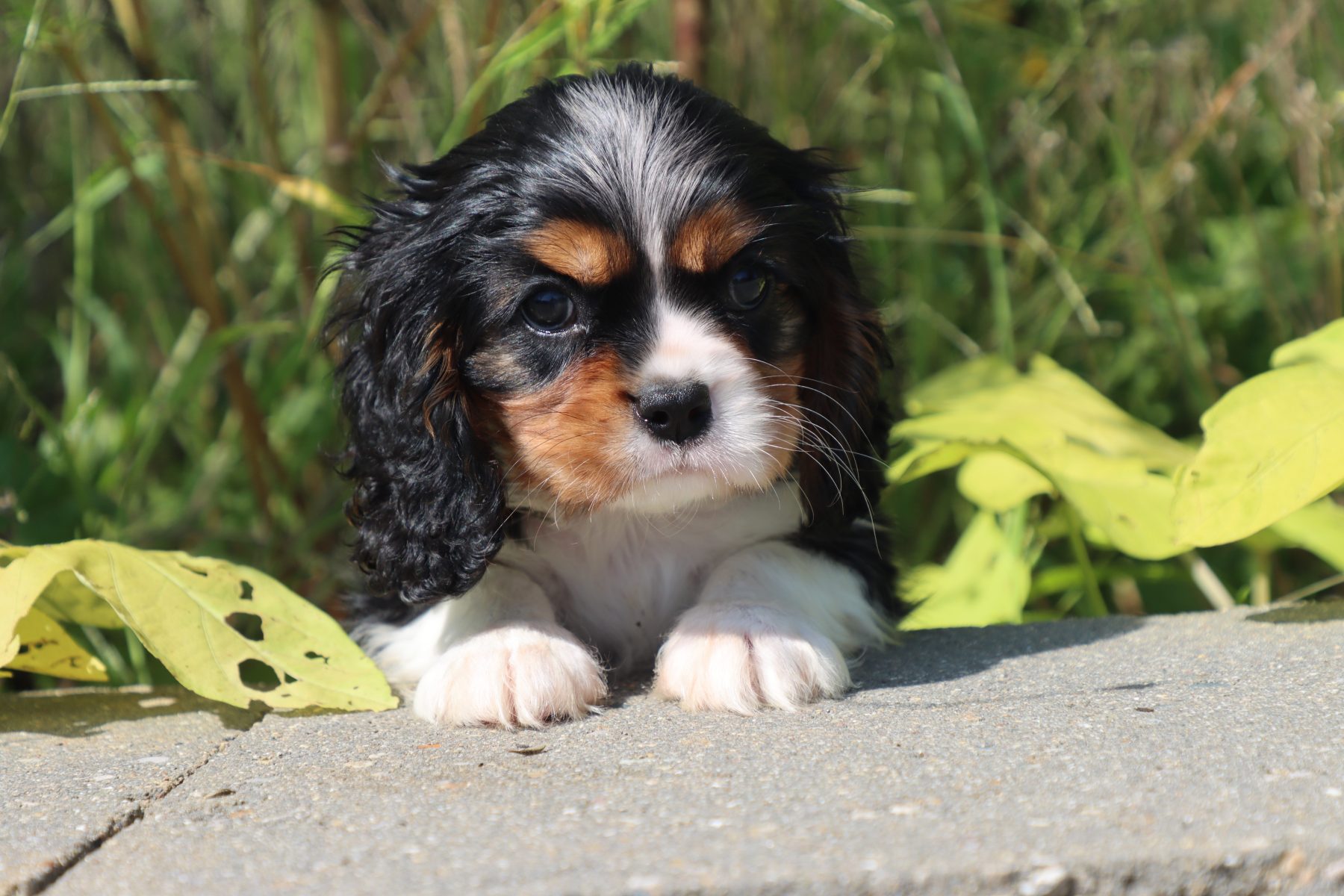
Cavaliers tend to respond well to positive reinforcement. Praise, treats, play, and affection can help puppies understand which behaviors you want them to repeat. Just as importantly, consistent expectations make it easier for them to understand the rules.
As your puppy grows, training can become more challenging in productive ways. You can practice familiar skills around distractions, reinforce good manners in different environments, and introduce new things to learn.
Adolescence may occasionally test your patience. A puppy who seemed to know exactly what you were asking may suddenly become more interested in something happening across the yard. That doesn’t mean earlier training was wasted. Continued consistency helps those skills become more reliable as maturity catches up.
Socialization Helps Build Confidence
Socialization is another process that starts early and continues as your puppy grows.
It involves much more than meeting other dogs. People, household noises, car rides, grooming, different surfaces, new environments, and everyday experiences all help a puppy learn how to respond to the world.
The goal isn’t to expose your Cavalier to everything as quickly as possible. Positive, age-appropriate experiences can gradually help build confidence without overwhelming them.
As your puppy matures, continue providing opportunities to experience new things safely. A confident adult dog is often the result of many small, positive experiences accumulated throughout puppyhood. Avoiding common mistakes new Cavalier owners make, including skipping early socialization, can help you establish a strong foundation.
Exercise Evolves With Age
Cavaliers are wonderful companion dogs, but that doesn’t mean they want to spend every moment on the couch. They can be playful, curious, and enthusiastic about being active with their families.
For a young puppy, play and opportunities to explore provide valuable activity. Their bodies are still developing, so strenuous or prolonged exercise isn’t necessary simply because they seem energetic.
Walks and other activities can gradually evolve as your Cavalier grows. Adult dogs can enjoy a more established exercise routine that incorporates physical activity along with opportunities to explore and engage with their surroundings.
Mental activity matters, too. Training, sniffing, interactive play, and experiencing new environments give your Cavalier opportunities to use their brain as well as their body.
The right balance depends on the individual dog, and age, health, conditioning, and even weather can affect what is appropriate.
Puppy Energy Gradually Gives Way to Maturity
If you’ve ever watched an energetic Cavalier puppy race through the house, you’ve probably wondered how that little dog eventually becomes the adult Cavalier content to relax beside you.
It happens gradually.
There isn’t one birthday when a Cavalier suddenly becomes calm. As puppies mature, they typically become better at focusing, following familiar routines, controlling impulses, and settling after activity.
Adolescence can make the path there feel a little uneven. Increased confidence and greater stamina can sometimes arrive before adult self-control does.
Understanding when Cavalier King Charles Spaniels begin to calm down can help you set realistic expectations for this stage. Appropriate exercise, mental stimulation, training, rest, and consistent routines all help while maturity develops naturally.
And calm doesn’t have to mean inactive. Adult Cavaliers can still be playful and enthusiastic. Maturity is more about learning when it’s time to be active and when it’s time to settle.
Grooming Changes Along With the Coat
The Cavalier coat you see on a young puppy won’t look exactly like the coat they’ll have as an adult. The silky adult coat and characteristic feathering develop over time, bringing some changes to the grooming routine.
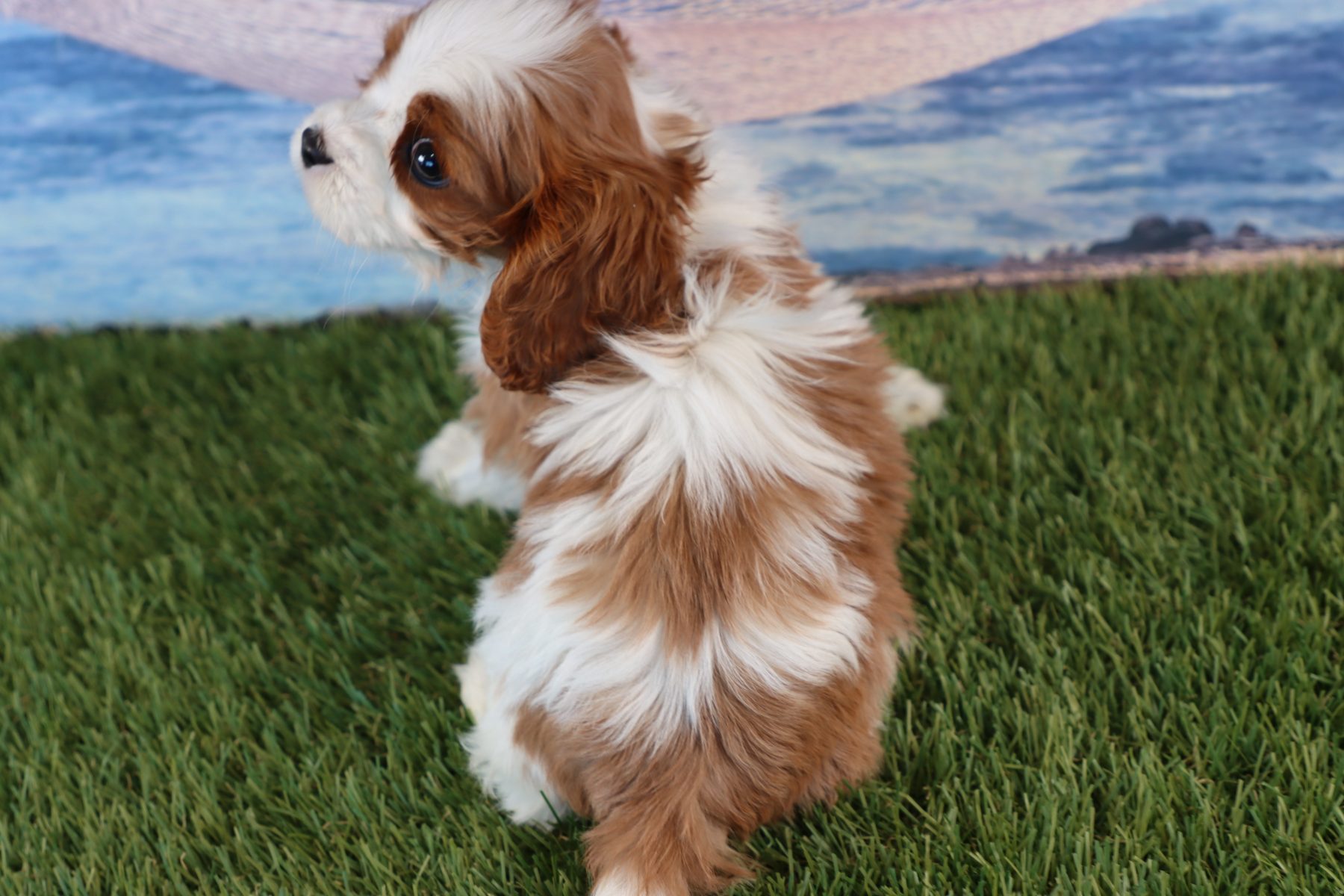
Introducing grooming while your Cavalier is young can make ongoing care much easier. Brushing, nail care, ear care, bathing, dental care, and general handling can all become familiar experiences rather than something suddenly introduced later.
As the adult coat develops, regular grooming becomes particularly important for preventing tangles and mats.
Grooming also gives you an opportunity to pay attention to your dog. When you’re regularly handling their ears, paws, coat, and body, you’re more likely to notice when something looks or feels different.
Everyday Care Becomes More Predictable
The daily routine of a nine-week-old puppy can look very different from life with an adult Cavalier.
Young puppies require considerable supervision. Potty breaks are frequent, meals follow a puppy-appropriate schedule, training sessions are short, and you may spend quite a bit of time making sure your puppy isn’t chewing or investigating something they shouldn’t.
Gradually, those routines change.
House training becomes established. Your dog can handle a more predictable schedule. Exercise evolves. Training advances. The adult coat develops, and your Cavalier earns more independence as they demonstrate an understanding of household expectations.
Knowing how your Cavalier’s needs change from puppyhood to adulthood can help you make those adjustments at the right time rather than continuing to treat an older puppy exactly as you did when they first came home.
Adulthood doesn’t mean your involvement becomes less important. Exercise, grooming, mental stimulation, companionship, training, and regular veterinary care continue to matter. They simply become part of a more established rhythm.
Your Relationship Is Growing, Too
Some of the most important development happening during puppyhood can’t be measured by age or size.
You’re getting to know each other.
Over time, you’ll learn what motivates your Cavalier, what excites them, what makes them uncertain, and how they communicate. Your dog is learning just as much about you. They begin recognizing your routines, expectations, and the rhythms of everyday family life.
Cavaliers are known for being affectionate companion dogs, and that close relationship is one of the qualities so many people love about the breed. A strong bond, however, works best alongside consistent expectations.
Affection, training, boundaries, routines, and opportunities for appropriate independence can all coexist. Together, they help your Cavalier understand their place within the family while building trust between you.
Adulthood Is Another Stage of the Journey
Reaching adulthood isn’t the end of raising your Cavalier. It’s simply the beginning of a more mature stage of life together.
The habits developed during puppyhood provide a foundation for what comes next. A puppy who has become comfortable with grooming, learned household expectations, experienced positive socialization, and developed healthy routines carries those experiences forward.
Every Cavalier will still be a little different. Some mature more quickly than others, and each dog develops individual habits and preferences. That’s part of the enjoyment of watching a puppy grow.
Before long, many of the things that required conscious effort during puppyhood simply become part of everyday life with your dog.
Start Your Cavalier’s Story With Us
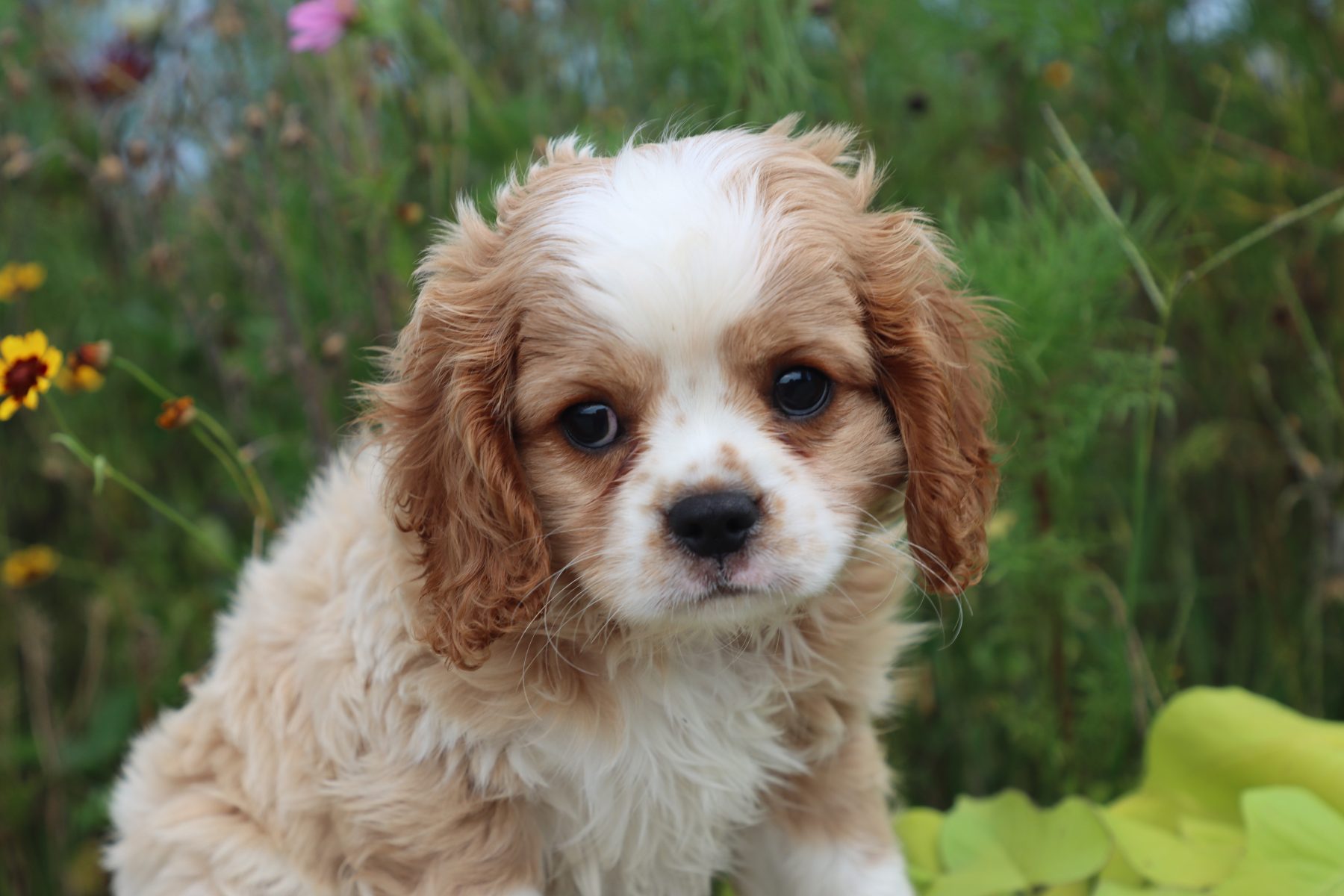
Raising a Cavalier King Charles Spaniel requires patience, consistency, and a willingness to adapt as your puppy grows. In return, you get to watch a tiny puppy learn about the world, develop their personality, find their place within your family, and become the adult companion who will share your life for years to come.
We want that journey to begin with a healthy, happy, well-socialized puppy. Our parent dogs are carefully health tested, and we put considerable care into those important first weeks before each puppy leaves for their new home.
If you’re ready to start that journey, browse our available Cavalier King Charles Spaniel puppies or contact Carlisle Cavaliers with your questions. We’d be happy to help you find the right puppy for your family.
Leave a Reply