

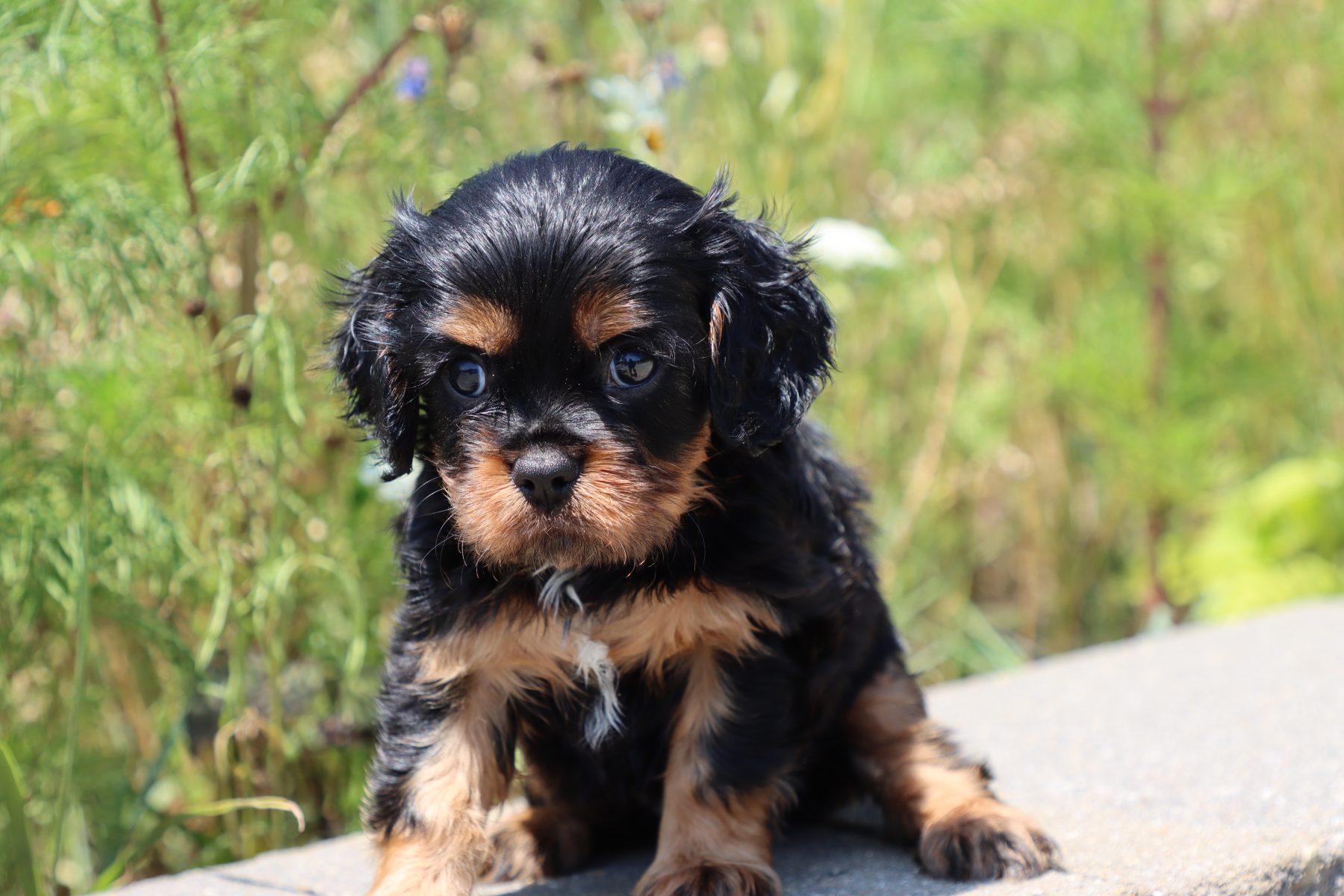
A lot changes between the day you bring home a Cavalier King Charles Spaniel puppy and their first birthday. The tiny puppy exploring your home for the first time will grow physically, but some of the biggest changes are harder to see. Confidence develops. Attention spans improve. New behaviors appear, and others gradually fade as your puppy gains experience.
Every Cavalier develops at their own pace, so there isn’t a perfect timeline that applies to every puppy. Still, understanding the general stages of development can give you a better idea of what may be happening as your puppy grows. These changes are an important part of raising a Cavalier King Charles Spaniel from puppyhood to adulthood, especially during a first year when it can sometimes feel as though you have a different dog from one month to the next.
The First Nine Weeks: Development Before Coming Home
By the time you meet your new Cavalier puppy, quite a bit of development has already taken place.
Newborn puppies begin life completely dependent on their mother. Their earliest weeks bring rapid physical and sensory development as they begin seeing, hearing, walking, playing, and interacting with their surroundings.
Their littermates are an important part of that early world, too.
Our puppies remain with their mother and littermates until they are nine weeks old, giving them valuable time to continue developing and learning through their interactions with one another. Puppies are also becoming increasingly aware of the people and environment around them.
When your puppy finally comes home, you’re not starting from scratch. You’re taking over during the next stage of a developmental process that has already been underway for weeks.
9 to 12 Weeks: Adjusting to a New Home
For many families, nine weeks marks the beginning of life together.
Your puppy is suddenly surrounded by new people, rooms, smells, sounds, and routines. That’s a lot for a young dog to process.
Some puppies settle in quickly, while others need more time before their full personality begins to emerge. You may see curiosity one moment and hesitation the next.
Your Cavalier is also learning how life works in your household. Where do I sleep? Where do I go potty? When do we eat? What happens when someone calls my name? What am I allowed to chew?
Consistency helps make those lessons easier to understand. Establishing predictable routines during the first 30 days with your Cavalier puppy can help make this transition smoother for everyone.
You’ll probably see plenty of sleeping as well. Young puppies need considerable rest to support all the growing and learning taking place, even if their energetic moments sometimes suggest otherwise.
3 to 4 Months: Growing Confidence and Curiosity
Once your Cavalier has settled into their new home, you may start seeing more confidence.
Your puppy knows you better. Daily routines are becoming familiar, and the world beyond the house may become increasingly interesting.
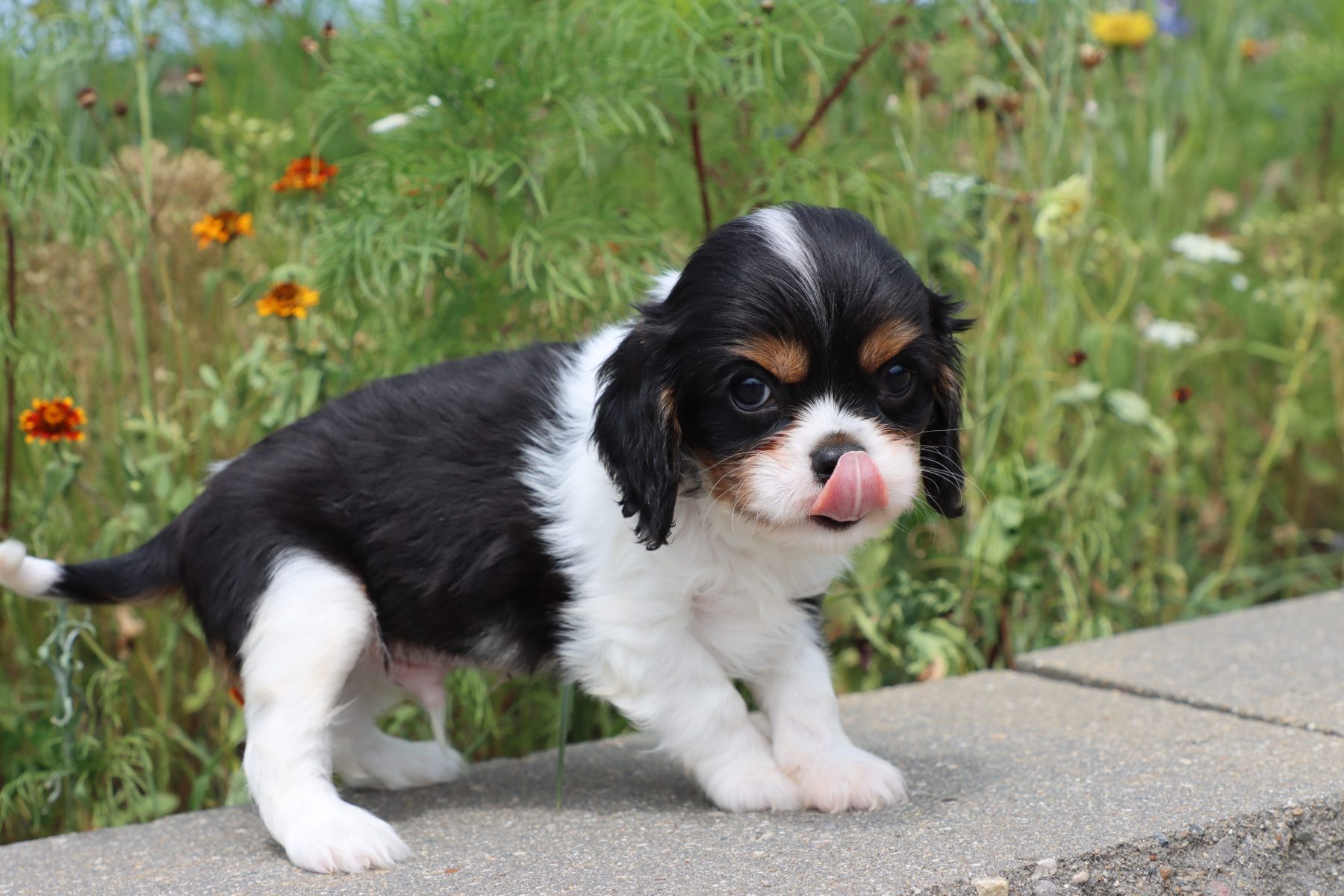
This can be a great time to continue building confidence through positive socialization with different people, appropriate environments, household sounds, handling, and everyday activities.
Training continues progressing, too. Your puppy’s attention span is still developing, so short sessions using positive reinforcement are generally more productive than expecting prolonged concentration.
Physical changes remain easy to spot. Your Cavalier may seem to look different from week to week as puppy proportions gradually change.
Growing confidence doesn’t mean your puppy suddenly understands everything expected of them, though. They’re still very young, and repetition remains an important part of learning.
4 to 6 Months: A More Capable Puppy
By four to six months, you may start noticing a puppy who seems considerably more capable than the little dog you first brought home.
They’ve had months to learn your routines. House training may be progressing, familiar cues are becoming easier to understand, and situations that were once completely new are now part of everyday life.
Chewing can also become particularly noticeable around this stage as puppies lose baby teeth and adult teeth emerge. Having appropriate toys for your Cavalier available to chew gives your puppy an outlet for that natural behavior.
Physically, your Cavalier continues moving toward their adult size.
It’s important not to mistake that bigger body for adult maturity. A five- or six-month-old Cavalier is still very much a puppy, something that becomes especially apparent as adolescence approaches.
6 to 9 Months: Adolescence Arrives
The adolescent stage can catch owners by surprise.
You may have spent months working on training and suddenly wonder why your Cavalier appears less focused on something they seemed to understand perfectly well.
Your puppy may become more easily distracted, curious, or independent. They also have a bigger, stronger body and more stamina than they did a few months earlier.
That doesn’t mean training has failed.
Adolescence is another developmental stage, and consistency remains important. Continue reinforcing the behaviors you’ve already taught rather than assuming your puppy should perform them perfectly because they’ve done so before.
This is also when owners may start wondering when their Cavalier puppy will begin to calm down. Greater physical ability combined with developing impulse control can make adolescence feel especially energetic, but maturity is still underway.
9 to 12 Months: Approaching Adulthood
As your Cavalier approaches their first birthday, some changes become less dramatic.
Your dog may be getting closer to their adult size, and their physical appearance is beginning to look more mature. The adult coat and characteristic feathering may continue developing as well. As that coat changes, establishing a consistent Cavalier grooming routine becomes increasingly important.
Behavioral maturity tends to happen more gradually.
You may notice better focus, greater familiarity with household expectations, and an improved ability to settle into daily routines. At the same time, don’t be surprised when your nearly one-year-old Cavalier still behaves like a puppy occasionally.
A first birthday is a milestone, not a switch.
Development continues beyond the first year, and individual dogs mature at different rates. Maintaining the training and routines you’ve established helps your Cavalier continue progressing into adulthood.
Growth Is More Than Physical
It’s easy to focus on weight and size because those are the most visible signs that your puppy is growing.
Your Cavalier is also learning how to communicate, respond to unfamiliar situations, control impulses, follow routines, interact appropriately, and understand what you expect.
That makes comparing puppies based solely on age difficult. One Cavalier may become confident in new environments quickly while another needs more time. One may grasp a training skill almost immediately while another benefits from additional repetition.
Development isn’t a race.
Watching the individual puppy in front of you gives you a much better sense of their progress than expecting them to match an exact timeline.
Let Their Routine Grow With Them
The care appropriate for a nine-week-old puppy won’t look exactly like the routine of a nearly one-year-old Cavalier.
Meal schedules evolve. House training progresses. Exercise needs change as the body develops. Training becomes more advanced, and greater maturity may allow your puppy to earn additional independence.
Learning to adjust your Cavalier’s needs as they move from puppyhood toward adulthood allows the routine to grow along with the dog.
Some things remain constant throughout every stage. Your Cavalier still needs companionship, positive interaction, mental stimulation, appropriate activity, grooming, and consistent expectations.
Enjoy Each Stage of Your Cavalier’s First Year
It’s natural to look ahead. During house training, you may wish for the day when accidents are behind you. During adolescence, adulthood can sometimes sound pretty appealing.

But puppyhood moves quickly.
Within that first year, you’ll watch your Cavalier learn your routines, develop confidence, change physically, and begin showing more and more of the adult personality that will eventually become so familiar to you.
Those early weeks begin before your puppy ever comes home, which is why we take them seriously. We focus on giving our puppies a healthy, well-socialized start before placing them with their new families at nine weeks old. Our parent dogs are health tested, and we put considerable care into preparing each puppy for the next stage of life with their new family.
If you’re thinking about bringing a Cavalier into your family, browse our available puppies or contact Carlisle Cavaliers with your questions. We’d love to help you begin that first year with a puppy of your own.
Leave a Reply